
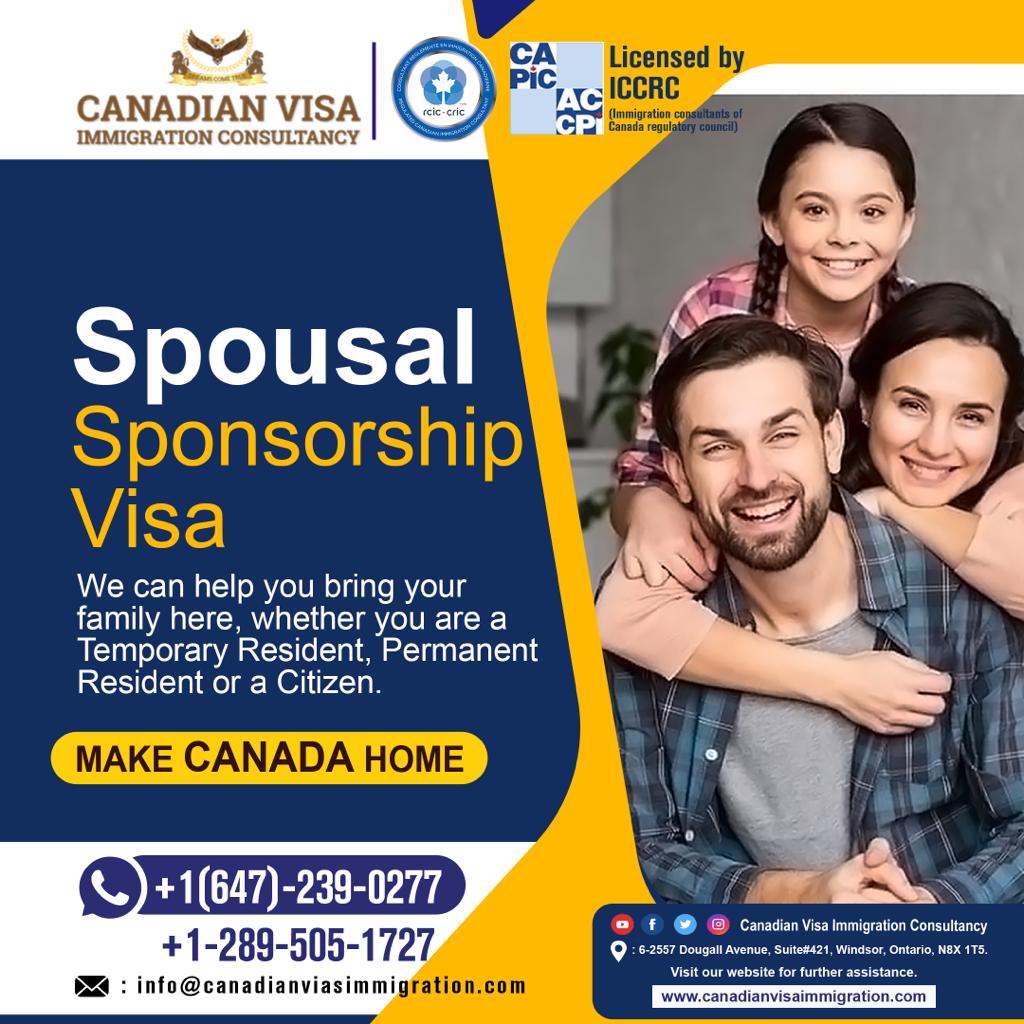
Spouse & partner permanent residence · Windsor, Ontario
Build your life together in Canada
When your future is together, your application deserves careful attention. Our Windsor team helps you understand spousal sponsorship, organize your evidence and prepare for the next step.
Whether your partner is abroad or already living with you in Canada, start with a review of both the sponsor’s eligibility and the applicant’s circumstances.
We speak English, Malayalam, Hindi and Tamil.
മലയാളത്തിൽ സേവനം ലഭ്യമാണ്.
Support for both of you
Understand your position
We review the relationship category, sponsor eligibility, residence situation and any previous immigration decisions before recommending an application approach.
Prepare a clear application
We help organize the sponsor and applicant information, review relationship evidence and identify gaps or inconsistencies that need attention.
The services, fees and responsibilities are confirmed in your written retainer. IRCC decides applications; representation does not guarantee approval or faster processing.
Choose the right application approach
Partner outside Canada
The Family Class is generally used when your spouse or partner lives abroad. It also applies to conjugal partners and dependent-child sponsorship.
Living together in Canada
The Spouse or Common-Law Partner in Canada Class may be appropriate when you live together in Canada. Some couples in Canada use the Family Class; residence, travel plans and status need review.
A spouse needs a legally recognized marriage. Common-law partners generally need at least 12 consecutive months of living together in a marriage-like relationship. Conjugal partnership has separate criteria and requires individual assessment.
Can you be a sponsor?
You generally must be at least 18 and be a Canadian citizen, permanent resident or a person registered under the Canadian Indian Act. Permanent residents must live in Canada; citizens abroad must show plans to return when the sponsored person becomes a permanent resident. Other eligibility restrictions apply.
A study or work permit alone does not make someone eligible to sponsor a partner for permanent residence. Check the sponsor requirements.
Organize your documents from the start
Our preparation separates documents from the information needed to complete the forms. Your final checklist depends on the current IRCC package, country instructions and your circumstances.
Sponsor information & documents
- Proof of Canadian citizenship or permanent residence, and passport or identity documents.
- Address, employment and financial information relevant to the application.
- Details of previous sponsorships, marriages and dependent children.
Applicant information & documents
- Passport, civil-status documents and current immigration-status records.
- Personal, address, travel and employment histories requested in the forms.
- Police certificates, photos, translations and other evidence required by your checklist.
Your relationship evidence
Prepare a clear timeline supported by relevant photographs, visits, communication, shared living arrangements or financial responsibilities, as applicable. Explain gaps honestly and keep dates consistent across the forms and evidence.
Tell us about prior refusals, previous relationships, children and any status concerns at the consultation. These details help us identify what needs closer review.
From first conversation to application follow-up
- Review your situation. Discuss your relationship, locations, immigration history and goals.
- Agree on the service. Confirm the scope and fees before application work begins.
- Prepare and review. Complete the information package, collect evidence and resolve questions.
- Submit and follow up. Review declarations before signing and receive help with the IRCC correspondence covered by your retainer.
A team you can speak with comfortably
Mr. Kumar, MBA, RCIC
Regulated Canadian Immigration Consultant · CICC registration R532917
Licensed Paralegal — Ontario · Notary Public · Commissioner of Oaths
Ms. Marline Joy
Licensed Paralegal — Ontario and Immigration Business Manager. Ms. Marline Joy coordinates client communication, documentation and appointments as part of our immigration team.
Talk through your questions in English, Malayalam, Hindi or Tamil. Meet our team.
Client experiences
Clear guidance. Responsive support.
Clients have shared feedback about our communication and application support. These excerpts are from general client reviews displayed on our website.
“Knowledgeable staff, timely response, definitely very helpful!”
Christina Ealias
28 September 2026 · PR application review excerpt
“Marlin is very helpful and patient, explains everything properly.”
Sunveer Singh
4 August 2026 · General service review excerpt
Excerpts preserve the reviewers’ wording. Individual experiences and immigration outcomes vary.
Common spousal sponsorship questions
Do I need a minimum income?
Most spouse or partner sponsorships do not have a minimum income threshold. Exceptions apply when a sponsored dependant has a dependent child of their own. You still undertake to provide support and must meet the sponsor eligibility rules.
How long am I financially responsible?
Outside Quebec, the spouse or partner undertaking lasts three years from the date they become a permanent resident. It continues even if the relationship ends or your financial situation changes. Review the undertaking obligations.
Can my sponsored partner work in Canada?
Sponsorship itself does not authorize work. An eligible sponsored partner living with their sponsor in Canada may apply for a separate open work permit. An acknowledgement of receipt is generally required, with a limited exception for applicants whose status expires within two weeks. Status and other conditions must be checked. Check IRCC’s sponsored-partner work permit rules.
Can dependent children be included?
Eligible dependent children may be included. Generally, a child must be under 22 and have no spouse or common-law partner; some older children qualify under dependency criteria. All relevant family members must be declared, including non-accompanying children. Check who can be sponsored.
How much will the service cost?
We explain our professional fees and the proposed scope after reviewing your situation. Government fees and costs such as translations, medical examinations or police certificates are separate unless your retainer says otherwise.
Can you help after a refusal or an IRCC concern letter?
Contact us promptly with the decision or letter and its deadline. We can review the concerns and discuss the services available for your circumstances under an agreed retainer.
Let’s discuss your next step together
For your first inquiry, tell us whether your partner is in Canada or abroad, whether you are married or common-law, and whether there is an upcoming deadline. Our team will explain how to arrange a consultation.
Suite 402, 1368 Ouellette Avenue, Windsor, Ontario
Landline: +1-289-505-1727
Reviewed 9 October 2026. Requirements and processing times can change. The guidance on this page covers federal sponsorship; Quebec has additional requirements.